
The ceremony is where the emotion lives. The reception is where it celebrates. The space between those two moments — how you move your guests, sustain the mood, and keep the energy building — is where great wedding planning is truly tested.
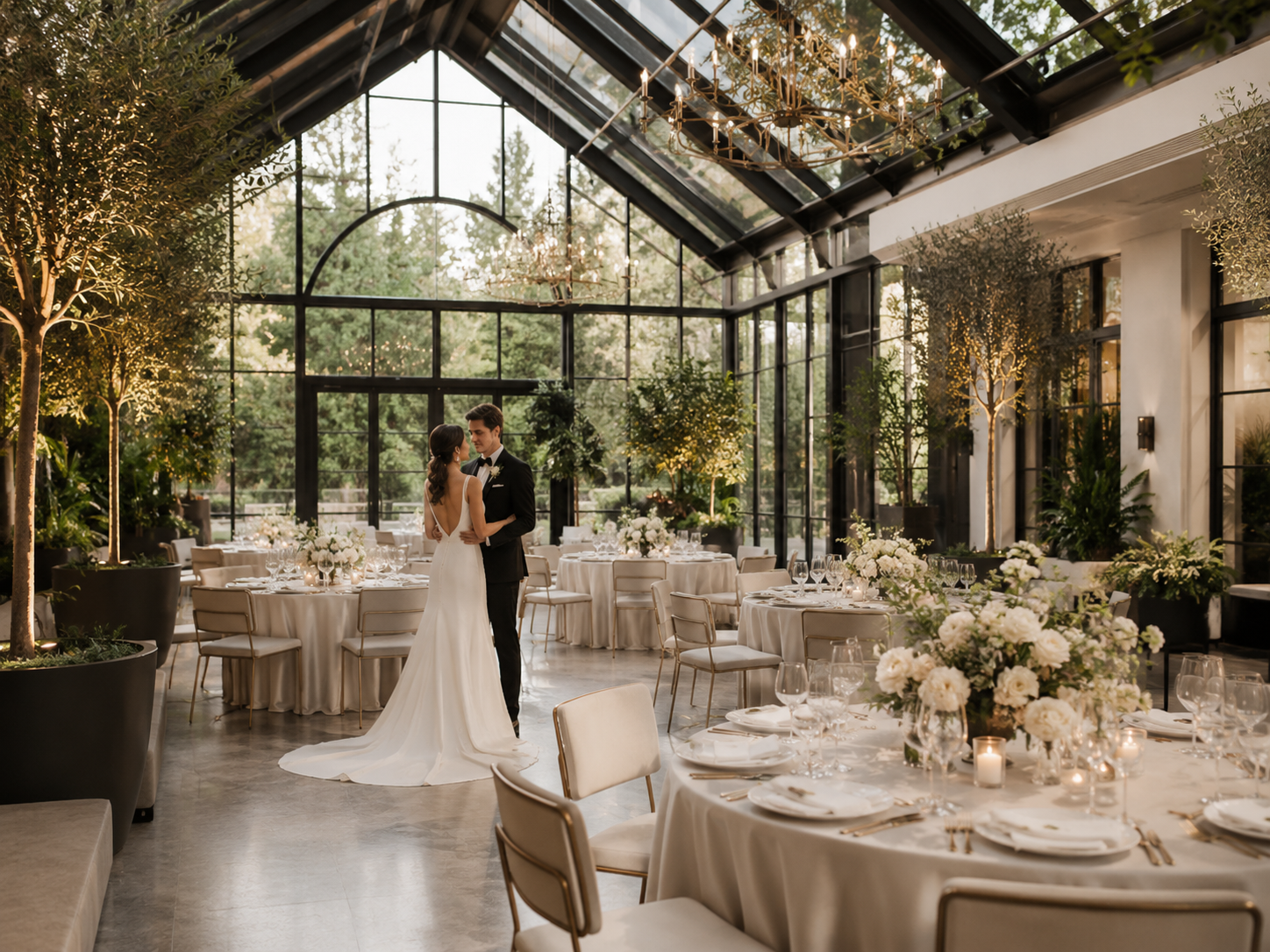
A greenhouse ceremony followed by a ballroom reception is one of the most elegant wedding formats a couple can choose. The contrast is intentional: soft, botanical, intimate for the vows — grand, luminous, and celebratory for the reception. When executed well, that transition becomes a moment guests remember as much as the ceremony itself.
Why This Format Works So Well
Couples drawn to a nature-inspired event space understand something important: the setting shapes the mood. A greenhouse brings a quiet, living intimacy to a ceremony — soft light through glass, lush greenery, the sense of being held by something organic and unhurried.
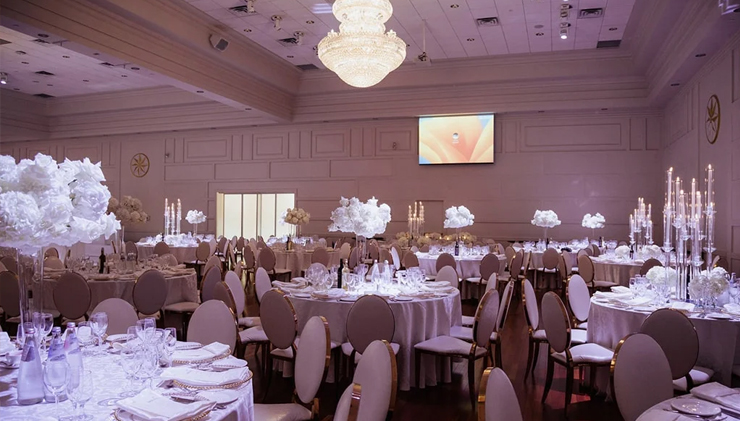
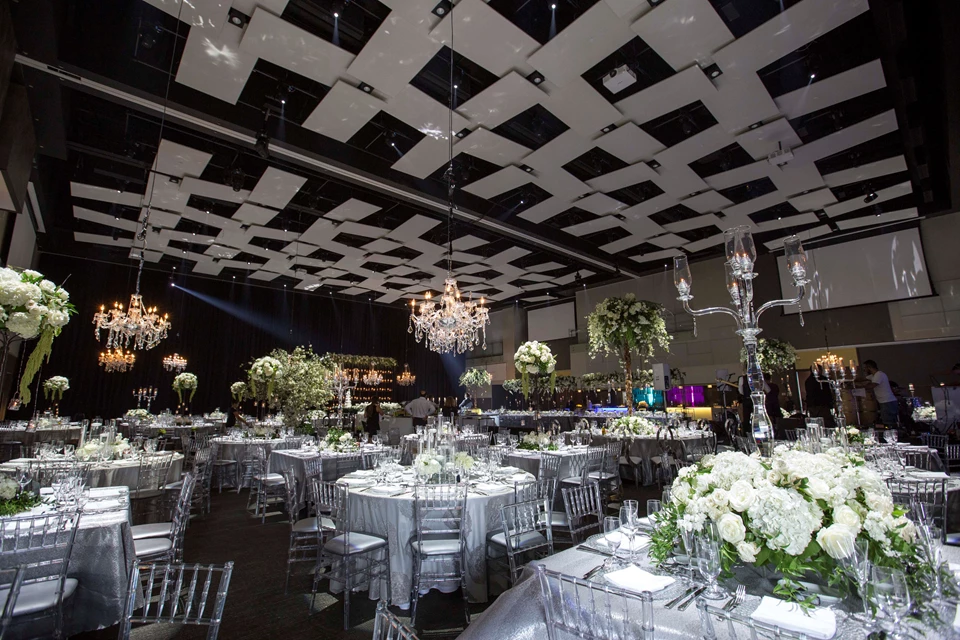
The ballroom reception offers scale, theatre, and control. Dramatic lighting, a dance floor, a full-service bar, a sweeping tablescape — these elements need a purpose-built interior to perform at their best.
Together, they give couples the best of both worlds. The ceremony feels personal. The reception feels extraordinary. And the movement between the two creates a natural narrative arc for the day.
Getting the Timing Right
Timing is the invisible architecture of a wedding day. Most couples underestimate how long transitions take — and overestimate how much wiggle room they have.
A greenhouse ceremony typically runs 20 to 35 minutes. Factor in the processional, any readings or rituals, the recessional, and the time it takes guests to leave their seats. Then add the cocktail hour — which ideally happens while the couple takes portraits — giving you and your photographer uninterrupted time in the greenhouse before the light shifts.
A realistic timeline looks like this:
- Ceremony: 20–35 minutes, including processional and recessional
- Cocktail hour: 60–75 minutes — guests move to a separate space; couple does portraits
- Transition to ballroom: 10–15 minutes, announced by your MC or coordinator
- Grand entrance: Couple enters the ballroom as guests are already seated
- Reception: 4–5 hours for dinner, speeches, and dancing
Build buffer time at every stage. A 10-minute gap between the ceremony ending and the cocktail hour beginning is not wasted — it is essential.
Planning the Guest Flow
Guests follow cues, not instructions. The most seamless transitions happen when people are gently guided rather than directed.
Post-ceremony:
- Station staff at the greenhouse exits to welcome guests and walk them toward the cocktail area
- Use clear, tasteful signage styled to match your wedding stationery
- Position welcome drinks at multiple stations just outside the exit — not one central point — so guests spread out naturally and no bottleneck forms at the door
Moving into the ballroom:
- Have your MC gather guests in the ballroom first, then announce the couple's entrance
- This builds anticipation and creates a definitive celebratory moment rather than a slow, unstructured trickle
Carrying the Aesthetic Through Both Spaces
Visual continuity is what makes a wedding feel designed rather than assembled. When guests move from a greenhouse wedding venue into a ballroom, they should feel the same story told in a different register — not a jarring shift in world.
This does not mean both spaces need to look identical. They need to share a design language.
- Colour palette: Use the same tones across both — botanical greens and warm whites in the ceremony, deeper jewel tones or candlelit gold in the reception
- Florals: Repeat a key bloom or foliage from the ceremony arrangements in the tablescape — even a small echo signals intention
- Stationery and signage: Consistent fonts and paper stock across menus, escort cards, and table numbers
- Lighting: Move from natural, diffused greenhouse light to warm, layered indoor lighting — candles on every table bridge the two beautifully
- Scent: Often overlooked — a light botanical note in the greenhouse and warm amber or sandalwood in the ballroom create a subconscious continuity
Photography Across Both Spaces
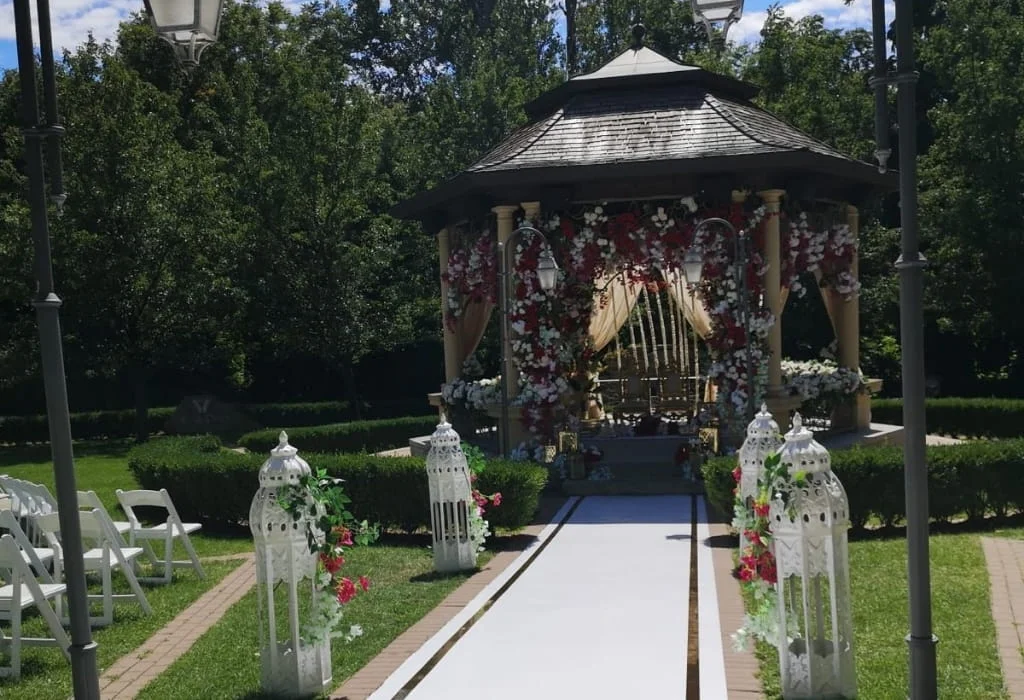
One of the greatest advantages of a greenhouse ceremony at an outdoor wedding venue in Vaughan is the quality of natural light. Glass structures diffuse sunlight beautifully, creating even, flattering conditions that photographers love.
Brief your photographer on the full venue layout before the day. Knowing where light moves, which angles work during the first dance, and where the best portraits can be taken between the two spaces saves time and ensures nothing is missed.
- Prioritise greenhouse portraits in the 30 minutes immediately after the ceremony — light in glass structures shifts quickly
- Use the cocktail hour to capture candid guest moments and detail shots of the ballroom before it fills
- Ask your photographer to get one wide establishing shot of the ballroom before the grand entrance — you will want it
- For evening receptions, coordinate with your venue on the exact lighting state for the first dance — warm and low works best
Working With Your Venue Coordinator
At a full-service wedding venue in Vaughan, your venue coordinator is your most important vendor. They know the space, the timings, the staff — and they have seen what goes wrong when transitions are not carefully planned.
Share your full day-of timeline with your coordinator at least four weeks before the wedding. Walk through the greenhouse exit points, the cocktail area layout, and the ballroom entrance. Discuss acoustic and technical cues — when the mic goes live, when the lights shift, when staff move from one space to the next.
A well-briefed coordinator makes a complex multi-space wedding feel completely effortless. That is the goal.
Small Details That Make a Large Difference
Elegant weddings are defined by what guests feel, not just what they see. These details may seem minor in planning — but they land powerfully on the day.
- Welcome card at each greenhouse seat — a simple card with the couple's names and the day's order of events helps guests feel oriented and cared for
- A signature cocktail hour drink — named for the couple, it gives guests something to talk about during the transition and signals the celebration has properly begun
- Live music or a curated ambient playlist between spaces — silence during transitions feels awkward; music makes it feel intentional
- A children's activity corner during cocktails — if you have younger guests, this lets parents relax and enjoy the hour fully
- Printed menus at each place setting — guests feel immediately welcomed and at home when the ballroom table is fully dressed on arrival
Where the Transition Becomes Part of the Story
At Ascott Parc Event Centre, the flow from the Conservation Greenhouse to the grand ballroom has been designed so that the journey between ceremony and celebration feels as considered as the spaces themselves.
Set within four acres of private gardens and conservation lands in Vaughan, Ascott Parc is one of the few outdoor wedding venues in Vaughan that offers true multi-space elegance — a nature-inspired event space for the ceremony, and soundproof, private ballrooms for the reception — without any travel between the two.
Walk the venue, ask your questions, and picture it for yourself — from the first vow to the last dance.
Your seamless wedding day starts with one visit. Book your consultation at ascottparc.com
FAQs
1. How much time should we allow between the greenhouse ceremony and the ballroom reception?
Most couples benefit from a 60 to 75-minute cocktail hour between the two spaces. This gives guests time to settle, gives the venue team time to complete any final ballroom setup, and gives you and your photographer uninterrupted portrait time before the light changes. Rushing this window is one of the most common planning mistakes — protect it on your timeline.
2. Will the greenhouse décor style clash with a more formal ballroom reception?
Not if the design is intentional. The contrast between a botanical ceremony space and an elegant ballroom is part of the appeal — it gives the day a natural arc. Carry a common colour palette, repeat a key bloom from the ceremony into the tablescape, and keep stationery consistent across both spaces. The two rooms do not need to look the same; they need to feel like they belong to the same story.
3. What happens if the weather affects our greenhouse ceremony plans?
A greenhouse structure is enclosed and climate-controlled, so external weather does not affect the ceremony itself. What it can affect is the outdoor cocktail hour or portrait time in the surrounding gardens. Discuss a wet-weather contingency with your coordinator well in advance — most full-service venues have indoor cocktail options that activate seamlessly. Always have a confirmed backup plan in writing before your wedding day.
4. How do we move 150-plus guests between spaces without it feeling chaotic?
Station staff at the greenhouse exits to direct guests warmly, use signage that matches your wedding aesthetic, and position welcome drinks in the cocktail area to pull guests forward naturally. For the move into the ballroom, have your MC invite guests to take their seats before the couple's grand entrance — this builds genuine anticipation and creates a definitive moment of transition rather than a slow drift.
5. Do we need a separate wedding planner if the venue has a coordinator?
A venue coordinator manages everything within the venue — staff, space setup, timing cues, and day-of logistics. A wedding planner manages everything outside it — vendor contracts, rehearsal, your personal timeline, and the overall vision. For a multi-space wedding, having both is worth considering, particularly if your guest list exceeds 100. At minimum, make sure your venue coordinator receives your full day-of timeline at least a month before the wedding.