
Flowers are no longer an afterthought at garden weddings. They are the design language that sets the tone before a single guest reads the invitation twice. For anyone comparing a wedding venue this season, floral direction has become one of the biggest style decisions in the entire planning process.
It's worth choosing a wedding venue in Vaughan with strong natural bones to build on. Garden-style celebrations are moving past rigid, matchy arrangements toward organic textures, seasonal storytelling, and florals that work with the architecture rather than compete with it. Here's what's shaping bouquets, arches, and tablescapes right now.
Why Floral Décor Defines the Garden Wedding Experience
Garden weddings already come with a built-in advantage: natural light, greenery, and open sightlines. Good floral design amplifies that instead of overpowering it.
The Shift From "More" to "Intentional"
Couples are choosing fewer, more impactful floral moments rather than covering every surface. Think of one striking installation instead of five small ones.
This approach also photographs better. A single dramatic arrangement under natural light tends to outperform a room full of scattered centerpieces in wedding photography.
Trend 1: Oversized Statement Blooms
Large-format flowers are dominating 2026 wedding boards, and for good reason. They read beautifully in both photos and in person.
- Garden roses and peonies in extra-large clusters
- Dahlias used as focal points rather than filler
- Single-variety arrangements for a bold, editorial look
This trend works especially well for arch décor and entrance moments, where scale matters more than variety.
Trend 2: Greenery-First, Color-Second Palettes
Instead of leading with color, many couples are leading with texture. Color becomes an accent rather than the main event.
What This Looks Like in Practice
- Trailing eucalyptus, olive branches, and ferns as the base layer
- Soft blush, ivory, or sage tones layered in sparingly
- One unexpected pop color used only in the bouquet or boutonnières
This palette style suits both indoor-outdoor flow and fully open-air ceremony spaces, since it echoes the natural surroundings rather than fighting them.
Trend 3: Seasonal and Locally-Inspired Arrangements
Seasonal florals aren't just a budget-friendly choice anymore, they're a design statement. Couples are asking florists to build arrangements around what's actually blooming during their wedding month.
- Spring: tulips, ranunculus, and flowering branches
- Summer: dahlias, garden roses, and delphinium
- Fall: chrysanthemums, amaranthus, and rich foliage
This seasonal-first mindset also reduces the risk of last-minute substitutions and keeps the overall look cohesive with the time of year.
Trend 4: Floral Installations Built for the Setting
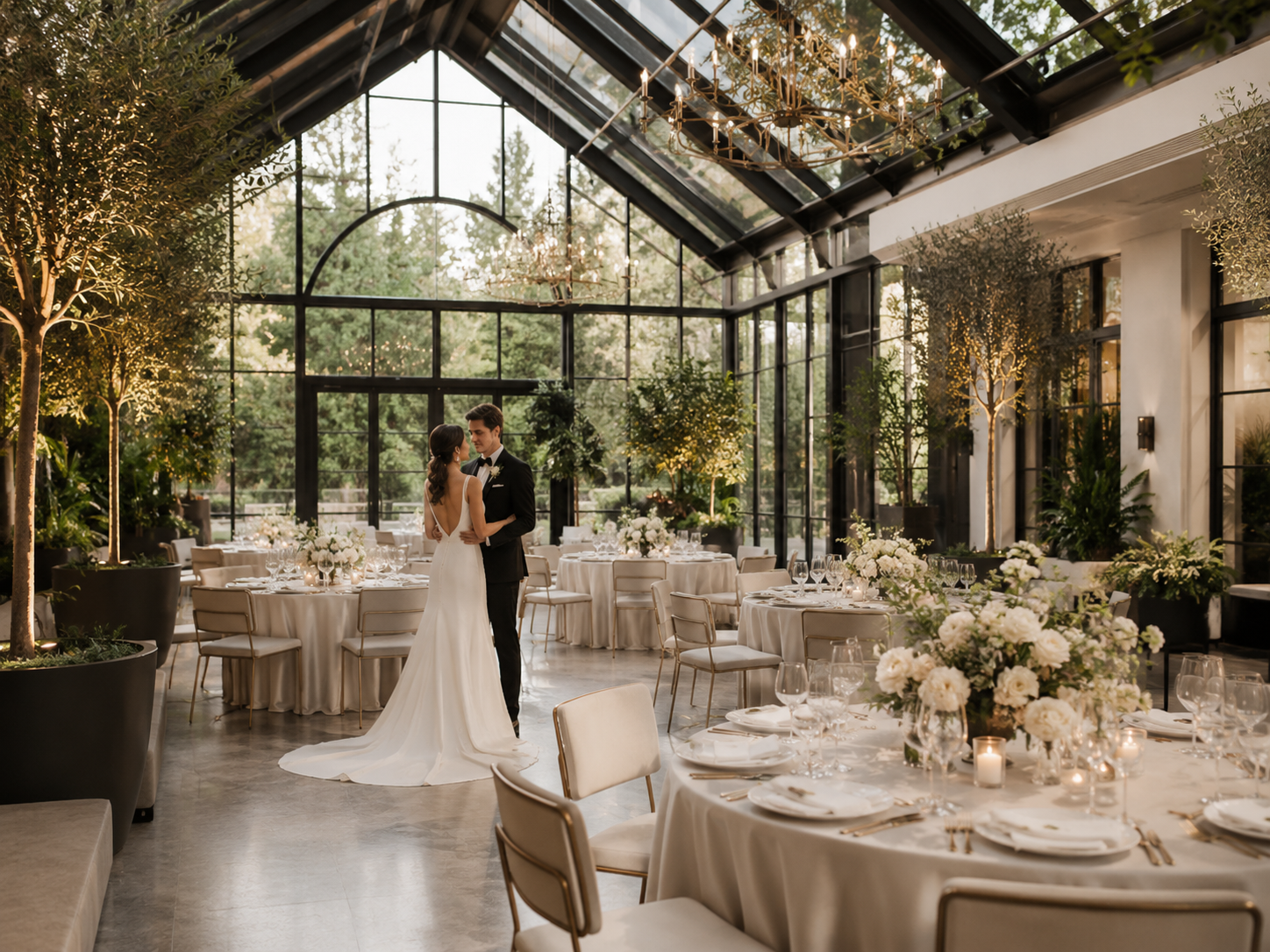
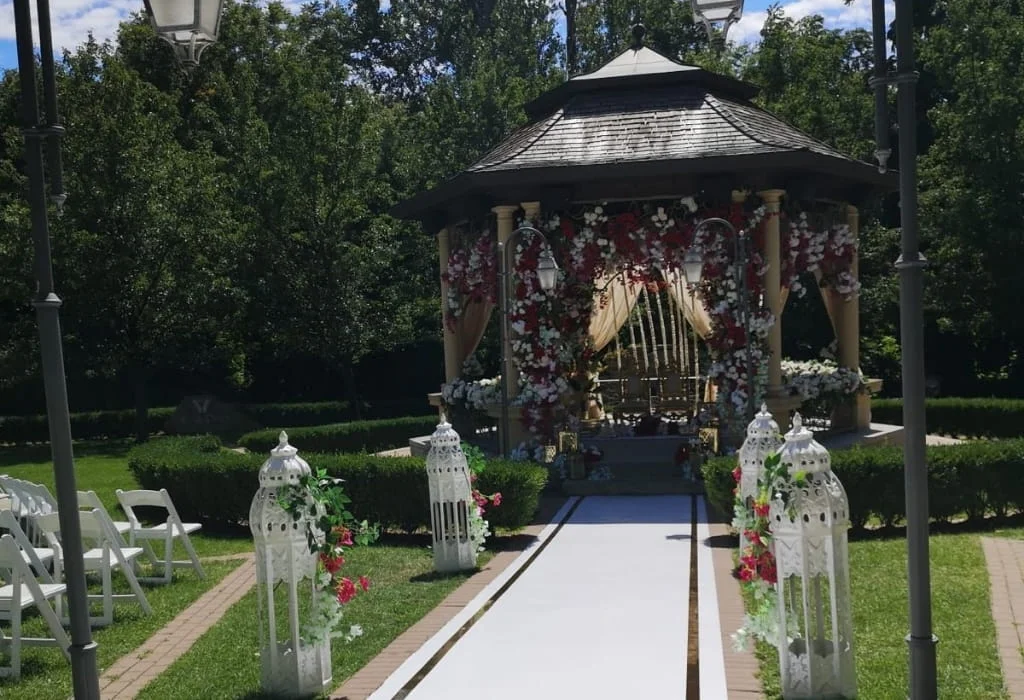
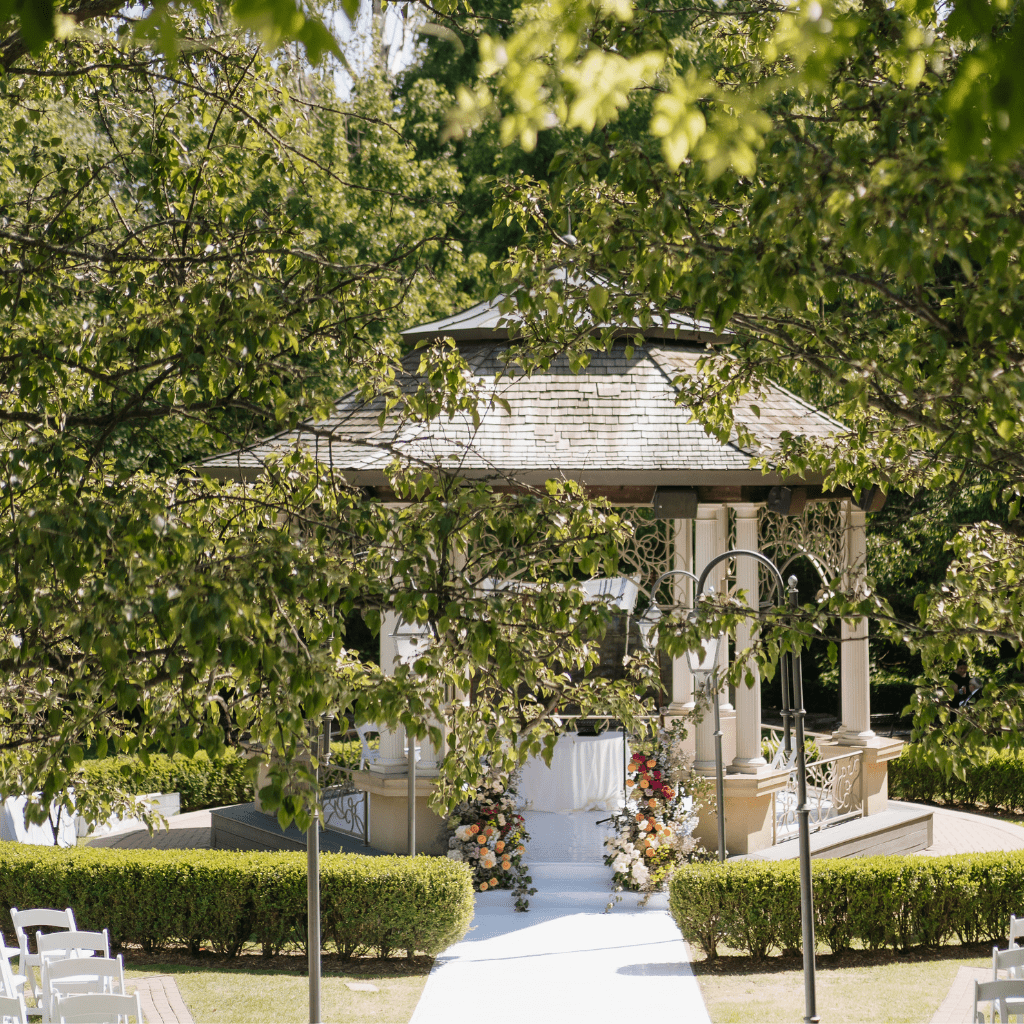
The best floral design responds to where it's placed. A ceremony under a gazebo calls for a different approach than a reception inside a greenhouse, and Ascott Parc happens to offer both as part of its wedding venue.
Gazebo Ceremony Florals
A gazebo structure already has architectural presence, so florals here work best as accents rather than full coverage:
- Cascading arrangements down the structure's posts
- Asymmetrical clusters instead of symmetrical matching sides
- Aisle markers that echo the gazebo's floral palette without duplicating it
Greenhouse Reception Florals
A greenhouse setting comes with its own built-in greenery, which means floral design can lean into contrast and height:
- Hanging installations that draw the eye upward
- Tall, airy centerpieces that don't block sightlines through the glass
- Botanical textures that blend with the greenhouse's existing plant life rather than compete with it
Choosing a greenhouse wedding venue in Ontario, such as Ascott Parc, often means couples get this dual advantage automatically, without needing heavy floral budgets to achieve a lush look.
Trend 5: Sustainable and Reusable Floral Design
Sustainability has moved from a nice-to-have to an expectation. Couples are asking florists smarter questions about waste, sourcing, and reuse.
- Ceremony arrangements repurposed for the reception
- Potted plants and florals guests can take home
- Locally sourced blooms instead of imported, out-of-season stems
This trend pairs naturally with garden and greenhouse settings, where the existing landscape already reduces how much additional floral volume is needed.
Trend 6: Textural Layering Over Perfect Symmetry
Perfectly matched, symmetrical florals are giving way to a more organic, "just-gathered" look.
How Florists Are Achieving This
- Mixing bloom sizes within the same arrangement
- Adding unexpected elements like herbs, grasses, or wildflowers
- Allowing some stems to sit slightly looser rather than tightly wired
This style feels more editorial and less staged, which suits the natural backdrop that outdoor and garden-style venues already provide.
Choosing Florals That Match Your Wedding Venue
Not every floral trend suits every space. Before finalizing a design direction, it helps to walk the ceremony and reception areas with your florist.
Couples exploring outdoor wedding venues in Vaughan should pay attention to:
- Natural light direction during the ceremony time
- Existing greenery and architectural features already on-site
- Whether the reception space is fully enclosed, semi-outdoor, or open-air
A wedding venue in Vaughan with strong existing landscaping, like mature gardens, a gazebo, or a greenhouse, often needs less floral volume to achieve a luxury look, which can also help manage overall décor costs. Ascott Parc is one such venue, offering all three as part of its grounds.
Final Thoughts
Floral design is one of the easiest ways to make a garden wedding feel personal, current, and unmistakably yours. The right blooms don't just decorate a space, they complete it.
If you're picturing statement blooms under a gazebo or airy installations inside a greenhouse, Ascott Parc gives you the natural backdrop to make every one of these trends feel effortless. Book a private tour with Ascott Parc today and see how your floral vision comes to life, exactly the way you imagined it.
Frequently Asked Questions
What flowers work best for outdoor weddings?
Hardier blooms that hold up well in open air, like garden roses, dahlias, and greenery-based arrangements, tend to work best. Delicate flowers that wilt quickly in heat or wind are usually better saved for indoor moments like the head table.
How far in advance should I book my wedding florist?
Most couples book their florist 9 to 12 months before the wedding date, especially if they want specific seasonal flowers or a well-known florist with limited availability. Popular wedding months tend to book out even earlier.
Do garden or greenhouse-style weddings need less floral decoration?
Often, yes. When the setting already has natural greenery, structural features, or garden views, florists can use fewer arrangements to achieve the same lush, finished look, which can also be easier on the budget.
What's the cost difference between fresh and dried flowers for weddings?
Fresh flowers are generally more expensive because of sourcing, handling, and short shelf life, while dried or preserved flowers cost less upfront and can sometimes be reused. That said, fresh flowers still offer more variety and a more traditional look for most couples.
Can ceremony flowers be repurposed for the reception?
Yes, and it's a popular choice among couples who want a cohesive look throughout the day rather than starting fresh for each moment. Arch florals, aisle arrangements, and altar pieces can usually be relocated and styled into reception centerpieces or backdrop accents with the right planning from your florist.