
You said yes to hosting a gala. Now you are staring at a blank page wondering where the evening is supposed to start, how 500 people are supposed to sit, eat, and enjoy themselves — and who is responsible for making all of it happen.
The answer is: you are. But only if you follow the right sequence.
Every large-scale gala follows the same logical order of decisions. Get that order right, and the rest falls into place. This guide walks you through it — step by step, without the overwhelm.
Start With One Question: What Do You Want Guests to Feel?
Before venue, budget, or catering — answer this first.
Is this a formal seated gala with speeches and an awards segment? A cocktail-style evening with food stations and ambient music? A charity fundraiser with a live auction and keynote? A cultural celebration with performance and community feeling?
Your answer shapes everything. The floor plan, catering format, entertainment, and timeline all flow from the kind of experience you are designing.
Hosts who skip this step end up redesigning everything at the six-month mark — when it is expensive and stressful to change course.
Define the experience first. Then start planning.
Lock the Venue Before Anything Else
At 500+ guests, your venue is not just a location. It is the operational backbone of your entire event.
A space at this scale needs to deliver across several non-negotiables:
- True large-format capacity — seated dinner for 500 is very different from 500 standing. Confirm both numbers before you sign anything.
- Distinct zones for each phase — arrival, cocktail hour, main dining, and the program all need separate or clearly defined spaces. Cramped transitions break the guest experience.
- Parking that matches your headcount — 500 guests means 200 to 300 cars minimum. This is a dealbreaker if the venue cannot handle it.
- In-house catering — coordinating an external caterer into an unfamiliar kitchen at this scale adds unnecessary risk.
- Built-in AV infrastructure — lighting rigs, sound systems, and projection screens built into the space save you significant cost and last-minute coordination.
When shortlisting a banquet hall in Vaughan, always visit in person. A space that looks generous in photos can feel tight once you add round tables, a dance floor, a stage, service aisles, and a bar setup.
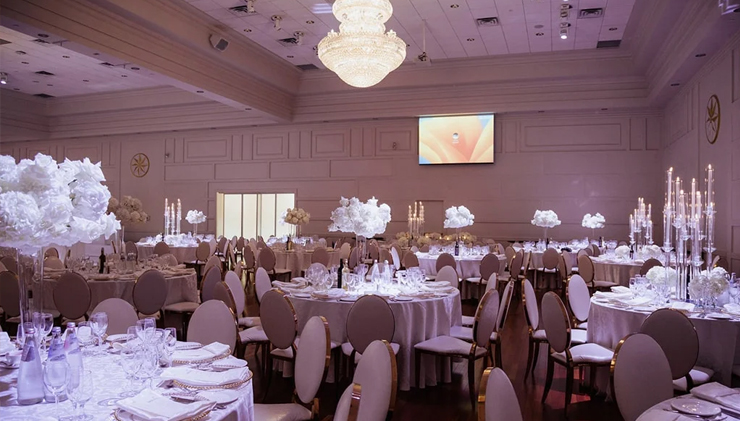
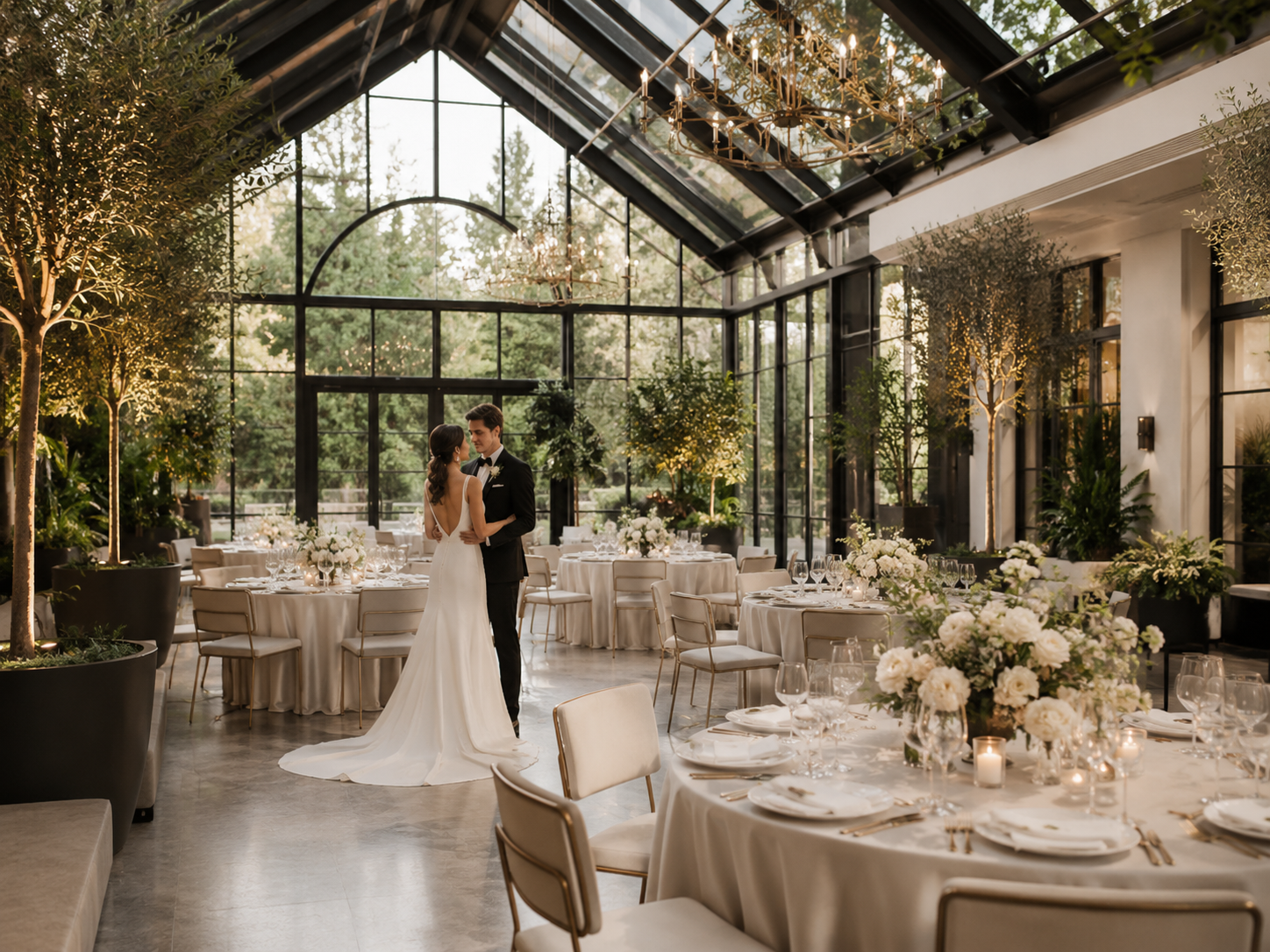
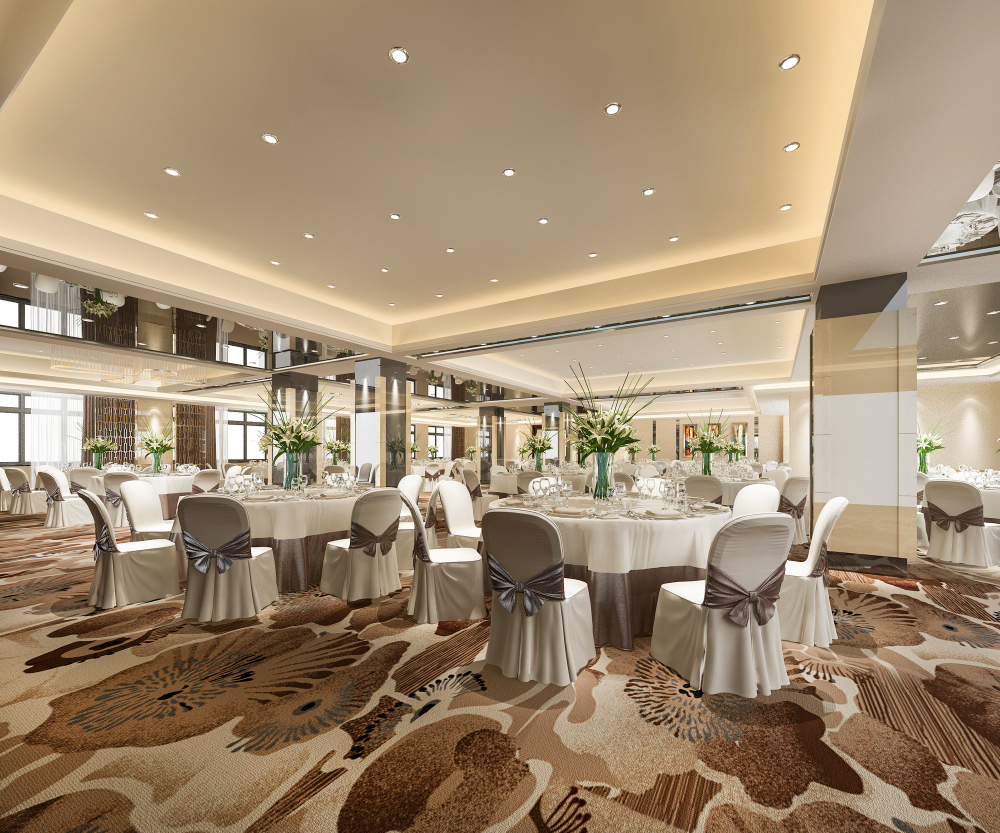
The Imperial Hall at Ascott Parc Event Centre spans 7,259 square feet with 28-foot ceilings and crystal chandeliers, comfortably seating up to 450 guests for a formal banquet and scaling to 535 for a reception format. For your cocktail hour, the Conservation Greenhouse — a climate-controlled, garden-style space — offers a beautiful pre-function setting that transitions guests naturally into the main event.
Curious whether Ascott Parc is the right fit for your event? Book a private tour and see the Imperial Hall and Conservation Greenhouse in person.
Build Your Budget Around Four Core Costs
Most first-time hosts underestimate total spend because they price one or two categories and guess at the rest. Build your budget across all four from the start:
- Venue and catering — typically 50 to 60% of your total budget at this scale
- Entertainment and AV — live band, DJ, MC, technical production, and staging
- Décor and florals — a large ballroom requires significant investment to feel complete, not sparse
- Guest communications — invitations, printed programs, table cards, and digital RSVP coordination
A 500-guest gala typically costs between $100 and $250 per person — and that number moves fast depending on your choices. Open bar, live entertainment, and elaborate florals push it up. In-house catering, a focused décor plan, and a set bar package bring it back down.
Whatever your final number is, add 10 to 15% on top. Something always shifts at this scale — and you want a buffer, not a panic.
Do Not Forget the Bar
For a gala in Ontario, alcohol service is a planning consideration most first-time hosts overlook until late in the process.
If your venue is licensed, they manage alcohol service directly as part of your event package. If not, you will need a Special Occasion Permit from the AGCO — the Alcohol and Gaming Commission of Ontario — which requires advance planning and specific conditions.
Discuss this with your venue at your very first meeting. Confirm whether bar packages are included and how alcohol service is managed on the day. It is a straightforward conversation that saves significant stress later.
How to Handle Invitations for 500 Guests
Getting 500 people informed, confirmed, and organized is its own project.
A practical approach:
- Send digital save-the-dates first as soon as the date and venue are confirmed
- Follow with formal invitations — printed for formal galas, digital for corporate or community events — at least 10 to 12 weeks before the event
- Use an RSVP tool — Google Forms, Eventbrite, or a dedicated event platform — to collect responses, dietary requirements, and accessibility needs in one place
- Follow up twice — build reminder touchpoints at four weeks and two weeks out into your calendar
Collecting dietary and accessibility information at the RSVP stage saves significant stress later. Do not wait until the week before to ask.
Work Backwards From Your Event Date
Large galas do not come together in three months. Here is a realistic planning timeline and why each stage matters:
- 12+ months out — Book the venue and confirm the date. Everything else depends on this being locked.
- 9 months — Finalize catering and contract your entertainment. Good performers and caterers fill their calendars early.
- 6 months — Send invitations. Draft your floor plan and outline the program so vendors know what they are working with.
- 3 months — Track RSVPs, begin seating assignments, and brief all vendors with a detailed event overview.
- 1 month — Finalize your run-of-show, submit confirmed headcount to catering, and ensure every vendor is briefed and ready.
A run-of-show is simply a minute-by-minute document of the entire evening — what happens, when, who is responsible, and what comes next. Think of it as a script for the night. Without it, even well-prepared vendors end up waiting for direction.
The Guest Experience Is Your Real Job
Once logistics are handled, your actual role as a host begins — and it is about how the evening feels, not just how it functions.
Think in three phases:
1. Arrival sets the tone.
Guests form their first impression in the first ten minutes. A well-lit entrance, clear signage, attentive greeters, and smooth coat check matter more than most hosts expect.
2. Flow sustains the energy.
The transition from cocktail hour to dining to the program should feel natural — not rushed, not confusing. The physical layout of your venue either supports this or fights it. Separate, purposefully designed spaces for each phase are essential for 500+ guests.
3. The program creates the memory.
Whether it is a charity appeal, awards ceremony, or cultural performance, the program needs pacing. Too long and guests disengage. Too brief and the occasion feels underwhelming. Your run-of-show document keeps this on track — and your day-of coordinator keeps everyone else on track.
Five Things First-Time Gala Hosts Always Underestimate
Setup time.
A gala for 500 guests takes 8 to 12 hours to set up properly. Factor this into your venue booking window — not just the event hours.
Dietary needs at scale.
With 500 guests, you will have dozens of dietary requirements. Collect this at the RSVP stage and share it with your catering team at least six to eight weeks before the event.
Day-of coordination.
You cannot host the evening and manage vendors at the same time. A dedicated day-of coordinator is not optional at this scale.
Décor costs for large ballrooms.
Centrepieces, uplighting, draping, and table settings for 500 covers add up faster than expected. Get quotes early and build this into your initial budget.
Guest count changes.
The final headcount almost never matches your early estimate. Build seating and catering flexibility into your planning from the start.
What to Ask Your Venue Before You Sign
Walk into every site visit with these questions:
- What is the exact seated and standing capacity for my preferred layout?
- Is catering handled in-house, and can I review a sample menu?
- What is included in the venue rental fee — and what costs extra?
- Is there a dedicated on-site coordinator assigned to my event?
- What is the parking capacity, and is valet available?
- What is the setup and teardown window on the day?
- Are bar packages included, and how is alcohol service managed?
- What is your policy if my headcount changes closer to the date?
- What is your contingency plan if there is an AV failure or a vendor no-show?
That last question matters. A venue with a clear answer has handled large events before. A venue that hesitates tells you something important.
How Ascott Parc Event Centre Makes It Easier
Planning a gala for 500+ guests means juggling a dozen moving parts. The right venue removes entire layers of that complexity.
- Imperial Hall seats up to 535 guests for a reception format
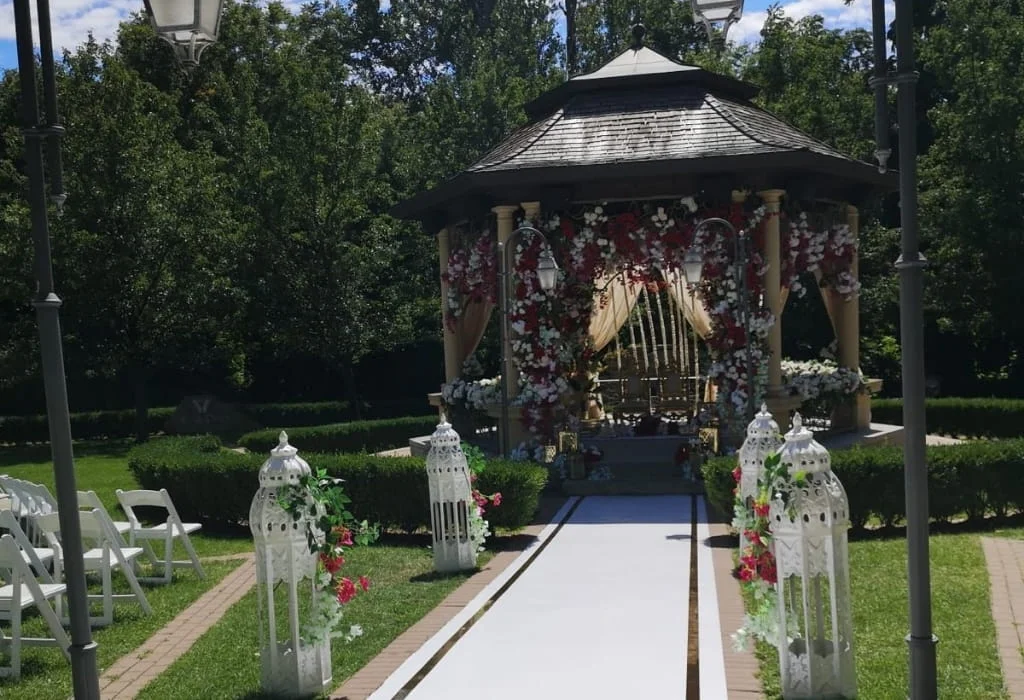
- Conservation Greenhouse and Garden Gazebo handle your cocktail hour — all on one property
- In-house executive catering with a customizable menu
- Bar packages available as part of your event — discuss options during consultation
- Dedicated on-site event coordinator present throughout your event
- Built-in elegance — 28-foot ceilings, crystal chandeliers, and a parkside garden backdrop
No juggling multiple vendors. No coordinating across separate locations. One venue, one team, one seamless evening.
Key Takeaways
Planning a gala for 500 or more guests is a significant undertaking — but it is entirely manageable when you follow the right sequence, ask the right questions, and choose a venue built for this scale from the ground up.
Ascott Parc Event Centre in Vaughan offers exactly that. With the grand Imperial Hall, the elegant Conservation Greenhouse, the scenic Garden Gazebo, in-house executive catering, dedicated on-site coordination, and the capacity to host up to 700 guests, Ascott Parc removes the operational weight so you can focus entirely on the experience you are creating for your guests.
Book a private consultation with Ascott Parc Event Centre today — and start planning your gala the right way.
Frequently Asked Questions
Can I host a gala for 500+ people without a professional event planner?
Yes — but you will need a day-of coordinator at minimum. This is someone who manages the vendors and timeline on the night so you can actually enjoy the event as a host.
How do I make sure 500 guests all get the right meal?
Collect food preferences when people RSVP — a simple form works fine. Share that list with your caterer at least six to eight weeks before the event and they will handle the rest.
What happens if more or fewer people show up than expected?
Guest counts almost always shift before the big day. Build some flexibility into your seating and catering plan early, and confirm your venue's policy on last-minute headcount changes before you sign.
How do I keep a 500-person gala from feeling chaotic?
It comes down to having a clear timeline for the evening — when guests arrive, when dinner starts, when the program runs. Share this with every vendor in advance so everyone is working from the same plan.
Is it cheaper to bring in my own caterer instead of using the venue's kitchen?
Not usually. External caterers charge extra for working in unfamiliar kitchens, and coordination gets complicated fast. A venue with in-house catering almost always works out simpler and more cost-effective at this scale.