
A beautiful wedding is never accidental. Behind every seamless celebration — every unhurried moment, every perfectly timed entrance — is a timeline built with precision, experience, and an intimate understanding of how the day actually flows.
Most couples underestimate this. They plan the dress, the florals, the menu — and leave the timeline as an afterthought. The result is a day that feels rushed, disjointed, and impossible to be fully present in.
A well-crafted timeline changes everything.
Why Your Timeline Is the Backbone of Your Wedding Day
Your venue, your vendors, your guests — every moving part of your wedding operates on time. When the timeline is tight, thoughtful, and realistic, the day unfolds with an ease that feels almost effortless.
When it isn't, everything unravels — quietly at first, then all at once.
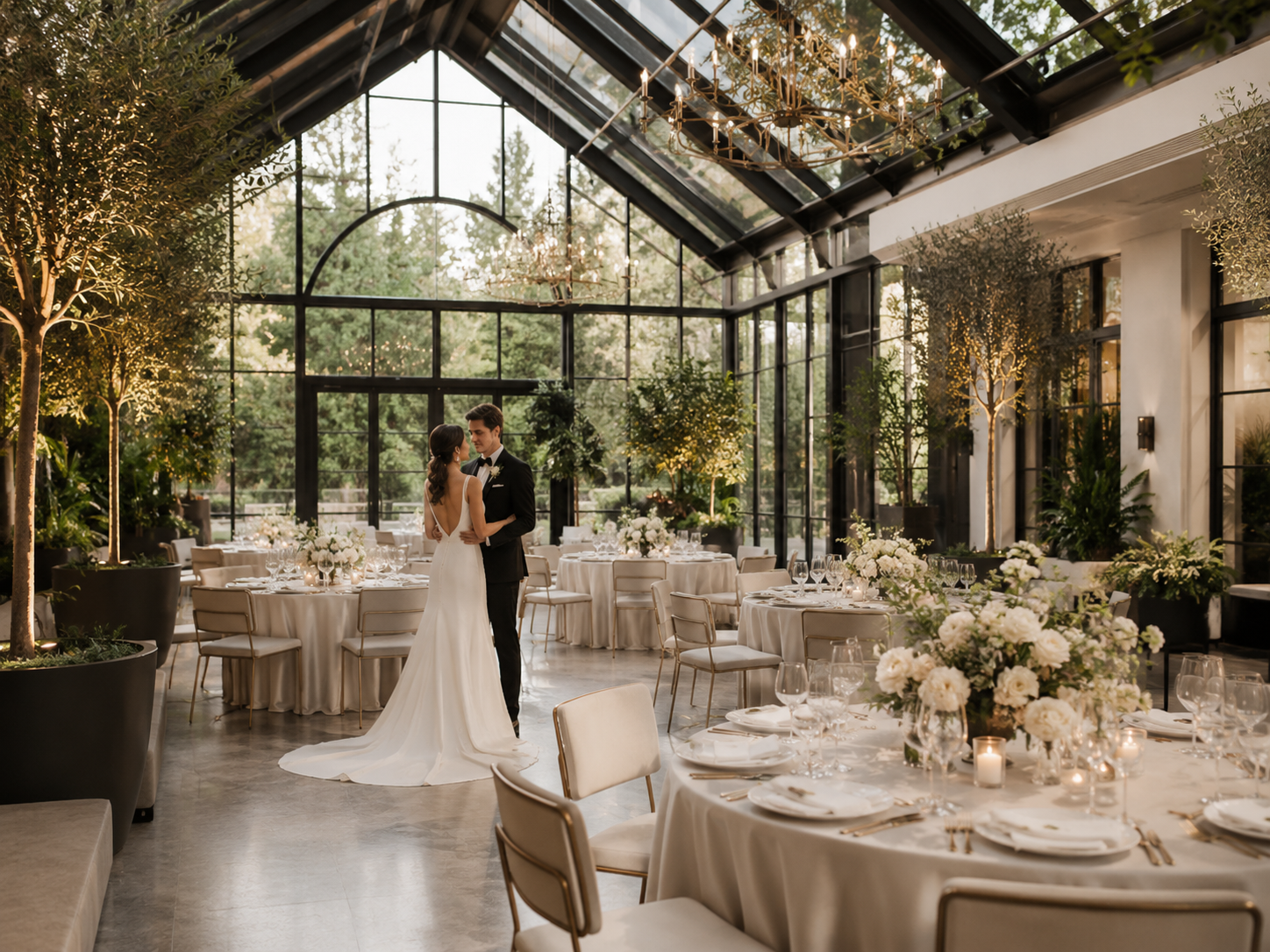
Whether you're celebrating in an intimate banquet hall in Vaughan, a sweeping large wedding venue with multiple event spaces, or a greenhouse wedding venue surrounded by conservation greenery, the principles of a great timeline remain the same.
Start With Your Non-Negotiables
Before building your timeline, anchor it around the moments that cannot move:
- Ceremony start time — confirmed with your officiant and venue
- Sunset time — critical for golden hour photography
- Venue end time — every event space in Vaughan operates within a booking window
- Catering service windows — your kitchen team works to a precise schedule
- Vendor arrival and departure times — photographers, florists, musicians all have contracted hours
Everything else is built around these fixed points.
The Ideal Wedding Day — Hour by Hour
Morning: Getting Ready
This is where most timelines fall apart. Getting ready almost always takes longer than expected.
- Allocate 30 to 45 minutes more than your hair and makeup team quotes
- Ensure your bridal suite or preparation space is calm, organised, and ready before anyone arrives
- Have a dedicated point of contact — a coordinator or trusted bridesmaid — managing the morning flow so you don't have to
Early Afternoon: Arrivals and First Look
If you're choosing a first look before the ceremony — a private moment between partners before guests arrive — schedule it at least 90 minutes before the ceremony begins. It allows time for:
- Relaxed, unhurried portraits
- Wedding party photos without the pressure of a waiting crowd
- A quiet moment to breathe before the celebration begins
The Ceremony
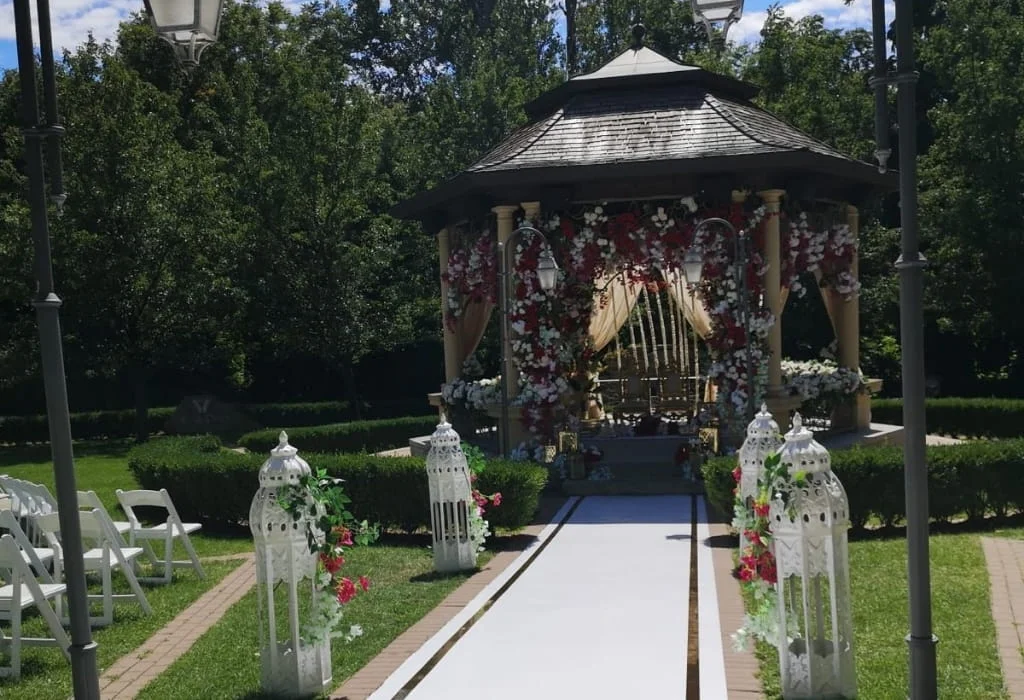
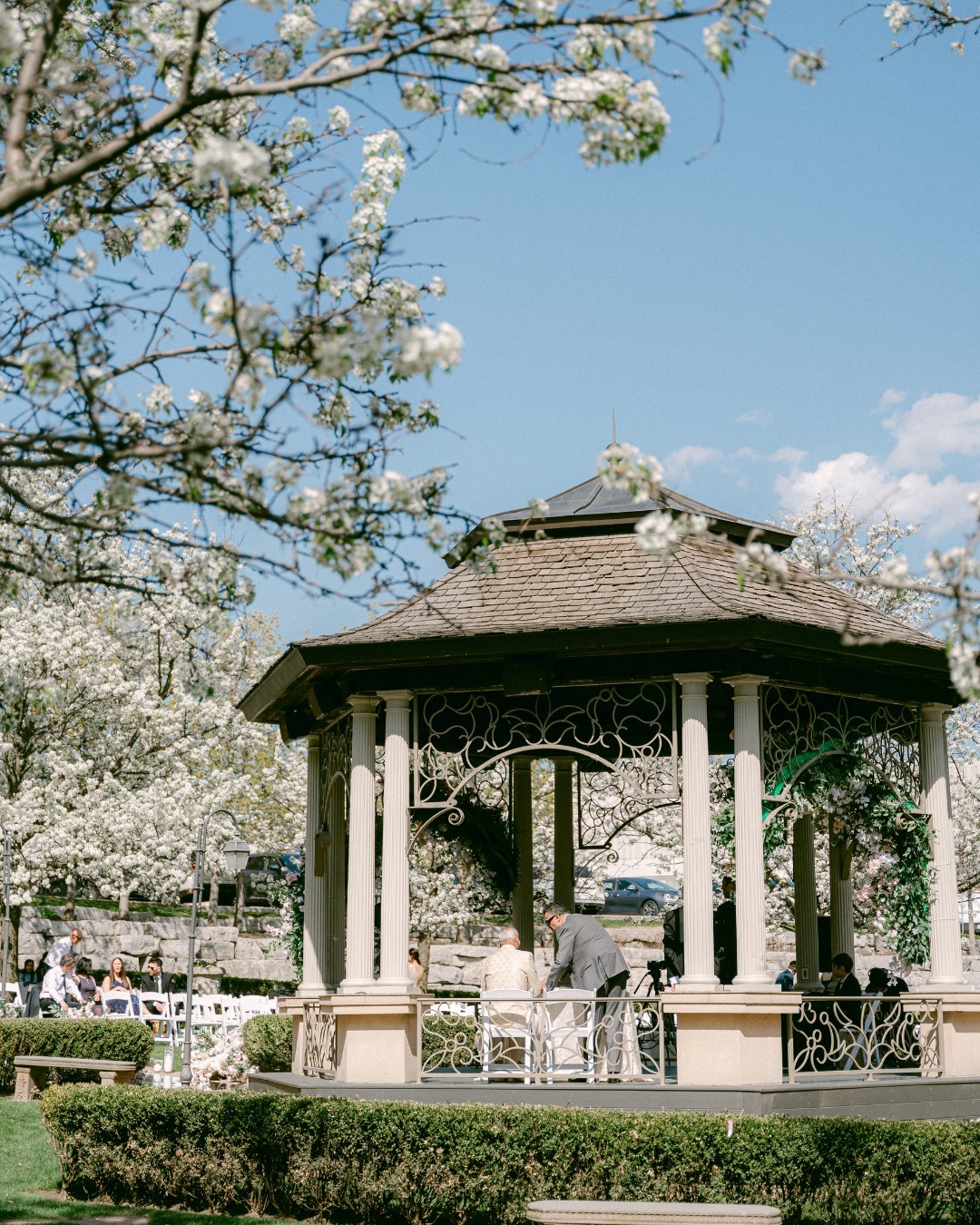
Regardless of whether you're exchanging vows at an outdoor wedding venue beneath open skies, inside a grand wedding ballroom, or at a wedding venue with gazebo framed by gardens — protect this time fiercely.
- Build in a 15-minute buffer before the ceremony start for late arrivals to be seated
- Keep the ceremony itself between 20 and 45 minutes — elegant, meaningful, and never drawn out
- Allow 10 minutes post-ceremony for the natural movement of guests before directing them to cocktail hour
Cocktail Hour
This is one of the most undervalued segments of the wedding day — and one of the most important.
- It gives your guests a moment to settle, connect, and enjoy
- It gives you and your partner time for portraits without guests waiting
- At a well-appointed luxury wedding venue, cocktail hour sets the tone for everything that follows
Ideal duration: 60 to 75 minutes. No shorter — guests feel rushed. No longer — momentum is lost.
The Reception
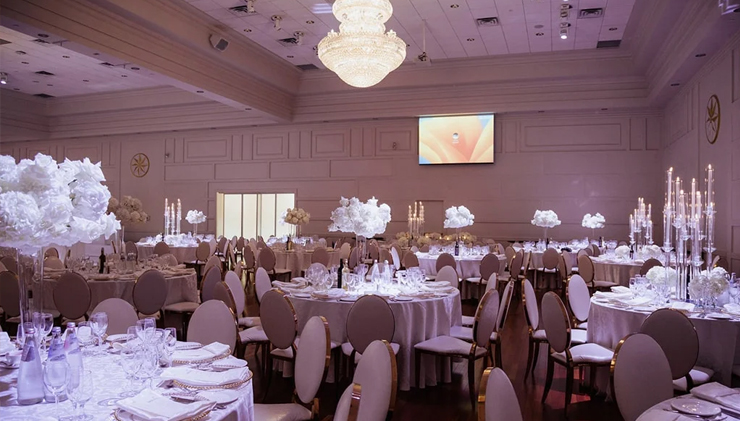
Once guests are invited into the wedding and banquet hall or ballrooms for weddings, the evening should flow with intention — not improvisation.
A refined reception timeline looks something like this:
- Guest seating & entrance music — 15 minutes
- Couple's grand entrance — 5 minutes
- Welcome and first course — 20 to 30 minutes
- Speeches — no more than 3 to 4, capped at 5 minutes each
- Main course — 30 to 40 minutes
- First dance and parent dances — 15 minutes
- Dancing and celebration — the remainder of the evening
- Cake cutting — scheduled during a natural pause, not an interruption
- Late night station or send-off — a considered closing moment
Common Timeline Mistakes to Avoid
Even the most beautifully planned wedding in Vaughan and unique wedding venues cannot compensate for a poorly structured schedule. Watch for these:
- Over-scheduling photography. An hour of portraits is generous. Two hours pulls you away from your guests for too long.
- Ignoring travel time. If your ceremony and reception are in different locations, factor in realistic transit — including traffic, guest movement, and vendor relocation.
- Skipping buffer time. Every segment of the day needs breathing room. A timeline with no margin is a timeline waiting to fail.
- Leaving speeches unmanaged. Unlimited speaking time is a gift no one actually wants to receive. Set expectations with your speakers in advance.
Work With Your Venue — Not Around It
The best timelines are never created in isolation. They are built in collaboration with your venue team, your photographer, and your catering coordinator.
The team at a distinguished luxury wedding venue — whether it's a greenhouse wedding venue, a sprawling large ballrooms for weddings and outdoor wedding venues on the same grounds, or a curated event space in Vaughan — has overseen hundreds of weddings. They know where time is lost. They know what your guests need. And they know how to keep the day moving without it ever feeling managed.
When you choose the right venue, timeline expertise comes with it.
The Bottom Line
A wedding day timeline is not a schedule. It is a framework for presence — for being fully in each moment rather than chasing the next one.
The most extraordinary weddings feel unhurried, effortless, and entirely alive. That feeling is not accidental. It is designed.
At Ascott Parc Event Centre — one of Vaughan's most distinguished wedding venues in Vaughan Ontario — every celebration is supported by an experienced planning team who will help you build a timeline worthy of the day you have always imagined.
Book your private consultation today. Because a wedding this beautiful deserves a day that flows just as perfectly.
Frequently Asked Questions
1. How early should we share the timeline with our vendors?
At least two to three weeks before the wedding. Your photographer, caterer, florist, and entertainment team all need time to align their own schedules with yours. The earlier they receive it, the more seamlessly the day runs.
2. Should we build buffer time into every segment?
Yes — always. A buffer of 10 to 15 minutes between major transitions is not wasted time. It is the difference between a day that flows gracefully and one that feels perpetually behind.
3. Who should hold the master timeline on the wedding day?
Your venue coordinator and lead photographer should each have a copy. A trusted member of your wedding party or a professional day-of coordinator should hold another. You should be free to simply experience the day.
4. What happens if the ceremony runs late?
A well-designed timeline absorbs minor delays without disruption. If your venue team and vendors are aligned and briefed in advance, small overruns are managed quietly — without your guests ever noticing.
5. How does the venue affect the timeline?
Significantly. A banquet hall in Vaughan with multiple spaces — indoor ballrooms, outdoor grounds, a wedding venue with gazebo — allows for a natural, unhurried flow between moments. Venues that require guests to travel between spaces, or that lack dedicated preparation areas, compress the timeline in ways that are difficult to recover from.
Related planning: compare separate wedding venues with one-location celebrations, see how luxury wedding and banquet halls shape modern events, and learn how venue layout affects reception flow.